
What AI Refereeing 2026 Actually Means
The term "AI referee" often conjures images of autonomous robots replacing human officials on the field. In reality, the technology emerging in 2026 is far more subtle and integrated. It is not about removing humans from the equation, but rather augmenting their judgment with precision tools that were previously impossible to deploy at scale.
At the core of this shift is skeletal tracking. Systems now capture player movements in three-dimensional space, creating digital twins that move in real-time. This technology allows for the detection of offside positions or foul contacts with a level of granularity that human eyes simply cannot match. The World Cup has already begun testing these systems, proving that the infrastructure is ready for widespread adoption.
Another major development is automated ball-strike detection. In baseball and cricket, cameras and sensors track the ball’s trajectory millisecond by millisecond. When the ball crosses the strike zone, the system flags the call instantly. This reduces human error in high-speed plays and removes the emotional bias that can sometimes cloud a referee's judgment during tense moments.
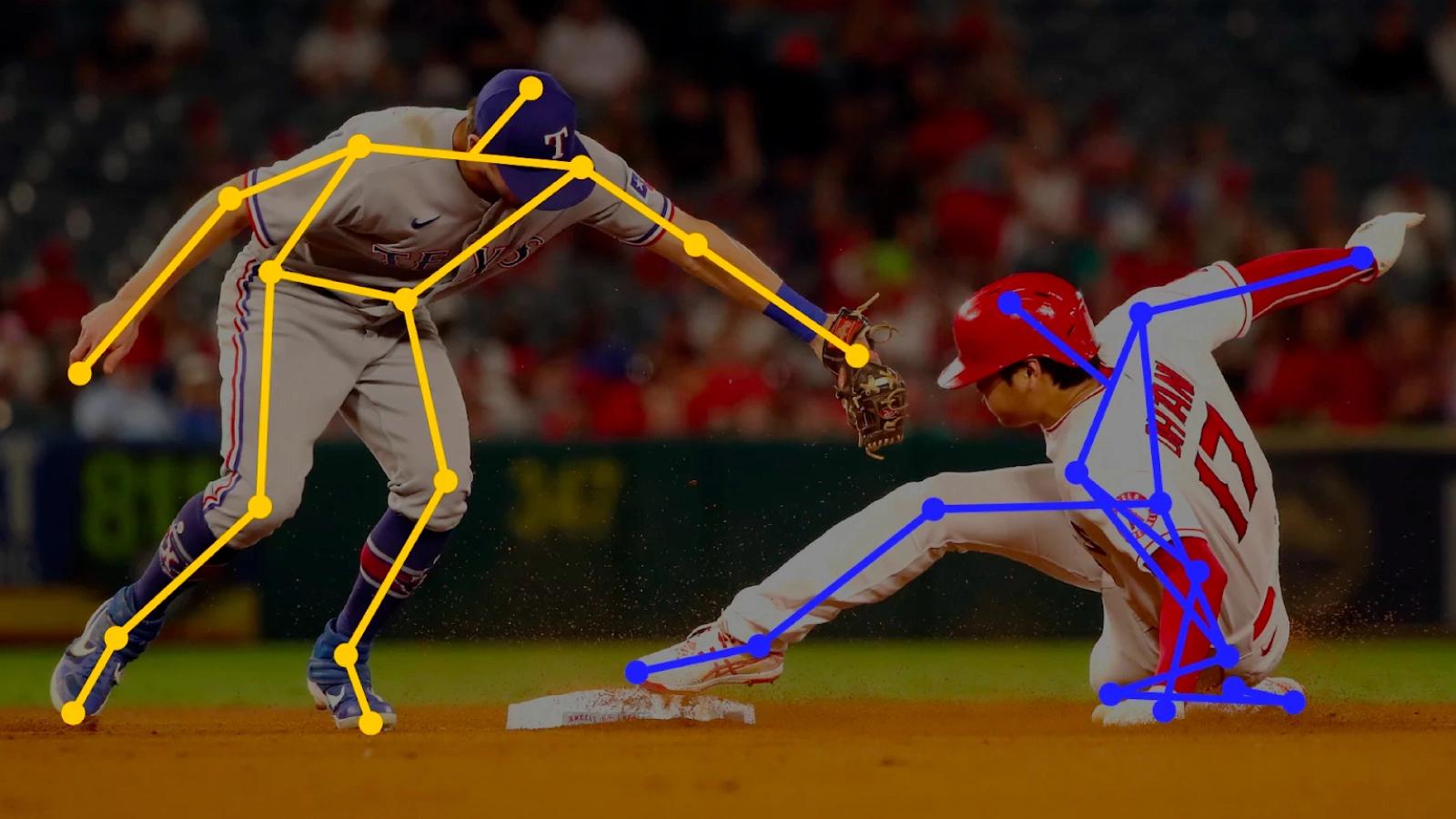
This evolution marks a transition from passive observation to active assistance. The goal is not to create a fully automated game, but to establish a hybrid model where technology handles the measurable data, leaving the nuanced, contextual decisions to human officials. This approach preserves the spirit of the game while ensuring fairness.
Skeletal Tracking and Offside Detection
The 2026 World Cup introduces a fundamental shift in how offside is judged, moving from human interpretation to algorithmic precision. By leveraging skeletal tracking technology, automated systems can now map player positions with millimeter accuracy, eliminating the ambiguity that has long plagued the offside rule.
At the core of this system is a network of high-speed cameras and sensors that create a real-time 3D model of every player on the pitch. The AI continuously tracks key anatomical points—such as shoulders, hips, and feet—allowing it to determine a player's exact location relative to the second-last defender and the ball. This data is processed instantly, providing referees with a clear, objective view of the play.
This technology addresses one of the most contentious aspects of football. In previous tournaments, VAR reviews often relied on 2D video angles, leading to debates over marginal decisions. The 2026 implementation uses 3D digital humans to judge offsides, ensuring that even the slightest advantage is detected. Referees now wear "cyber prosthetic" devices that provide immediate feedback, reducing the need for lengthy video checks and keeping the game flowing.

Real-Time Ball-Strike and Goal Tech
The integration of skeletal tracking and ball-strike detection has shifted officiating from reactive observation to instant verification. By 2026, these systems process spatial data at speeds far exceeding human reaction times, resolving ambiguities in goal-line crossings and contact points before the play concludes. This capability is central to the automated officiating framework being deployed for major tournaments, including the 2026 World Cup, where AI-driven decisions aim to eliminate controversial no-goal or foul calls.
The technology works by creating a digital twin of the pitch, tracking the ball and players’ limbs in three-dimensional space. When a potential goal or foul occurs, the system analyzes the exact moment of contact or line crossing. If the data confirms the ball fully crossed the line or a handball occurred, the signal is sent directly to the referee’s wearable device. This reduces the need for lengthy Video Assistant Referee (VAR) reviews, keeping the game fluid and minimizing stoppage time.
While human referees remain the final authority, their decision-making is now supported by precise, objective data. This collaborative approach ensures that critical moments are decided by facts rather than perception. As these systems become standard, the focus shifts from correcting errors after the fact to preventing them in real time, fundamentally changing how officiating is perceived and executed.
The Human Referee’s New Role
Automated systems handle the precision work—measuring offside margins to the millimeter or tracking ball trajectory—but they do not replace the referee. Instead, AI shifts the human official’s focus from data collection to game management and discipline. The referee remains the final authority, interpreting ambiguous situations and maintaining the flow of play.
In this collaborative model, AI acts as a high-speed assistant. It provides instant, verified data on technical violations, allowing the human official to concentrate on behavioral cues, player safety, and the overall context of the match. This division of labor ensures that decisions are both accurate and contextually appropriate.
Consider the 2026 FIFA World Cup, where skeletal tracking technology will likely assist in identifying subtle infractions. While the system flags potential fouls based on movement patterns, the referee must assess intent, severity, and the immediate game state. This human judgment is irreplaceable, ensuring that the spirit of the sport is preserved alongside its rules.
This shift reduces cognitive load for officials, allowing them to maintain better situational awareness. By automating routine checks, referees can devote more attention to managing player interactions and ensuring fair play, ultimately enhancing the integrity and enjoyment of the game for fans and participants alike.
How AI visuals shape fan trust
The introduction of automated officiating systems during the 2026 FIFA World Cup did more than just reduce human error; it fundamentally altered the relationship between the broadcast and the viewer. By integrating skeletal tracking and real-time body scans, broadcasters could now visualize the precise moment a foul occurred or an offside line was drawn. This transparency transforms the referee from a distant authority figure into a participant in a shared, data-driven narrative.
For fans, this shift is psychological as much as it is technical. When a controversial decision is immediately followed by a clear, objective visualization of the AI’s reasoning, the emotional backlash often dissipates. The technology acts as a neutral arbiter, removing the ambiguity that typically fuels anger on social media. Instead of debating a referee’s intent, viewers are analyzing the geometry of the play.
However, this integration requires careful handling. If the broadcast presents the AI’s decision as infallible truth without context, it can create a sense of detachment, making the sport feel overly clinical. The goal is not to replace the human element of sport but to use AI as a tool that clarifies the rules. When done correctly, these visuals reinforce the legitimacy of the outcome, allowing fans to accept a loss as a result of the game’s logic rather than officiating bias.
Frequently Asked Questions About AI Officiating
Will AI replace human referees? No. The industry is moving toward a collaborative model where automated systems assist rather than substitute. AI handles data-heavy tasks like skeletal tracking and offside detection, while human officials retain authority for judgment calls, game management, and final decision-making.
How accurate are automated calls in high-stakes moments? Systems like those used in recent World Cup qualifiers offer millimeter-precision for spatial decisions. However, they are not infallible. Video Assistant Referee (VAR) protocols still require human review to ensure context is considered before a call is confirmed, reducing the risk of mechanical errors affecting the final score.
What is the role of AI in officiating by 2026? By 2026, AI has shifted from passive video review to active, real-time assistance. Automated tools now process player movements and ball trajectories instantaneously, flagging potential infractions for officials to review immediately rather than after the fact.
No comments yet. Be the first to share your thoughts!